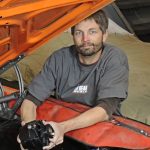

5 Minutes With…Thom Ophof of SaltWorks Fabrication
Thom Ophof was in his late 30s when he left his mechanical engineering career to take a job building cars at Tucci Hot Rods. Talk about following your passion! He put time in at several other shops before starting his own, SaltWorks Fabrication. Like many startups, it was a one-man shop for a few years, but fast forward to 2026 and he now has 14 full-time employees working together in about 28,000 sq. ft. of space in Sarasota, Florida.
SaltWorks embraces both traditional hand-worked craftsmanship and cutting-edge technology. The shop churns out amazing metal work yet also handles advanced design and machining, fabrication, interior, body and paint, so each build stays within the shop from start to finish. Thom’s passion for hot rodding, combined with his engineering and military background, has driven SaltWorks’ builds and the shop’s commitment to delivering the best to its customers. As Thom sums it up, “do what you said you were going to do.”
Goodguys: We heard you got your start in the hot rodding hrough mini trucks?
Thom Ophof: Absolutely—and I’m still into them. I started out building things at home, just figuring things out and learning as I went. I was also a mechanical engineer for a while, which influenced the way I approach designing and building things today.
GG: Are you self-taught in fabrication, or did you have formal training?
Ophof: I’m primarily self-taught, but along the way I’ve been fortunate to have some incredible teachers and mentors. Gary Brown, Dave Tucci, Steve Moal, Steve Panarites, Jackie Howerton, and Jerry Baker all taught me things that helped shape the way I work. You can teach yourself a lot, but having talented people willing to share their knowledge can accelerate that learning tremendously.
GG: Who were some of your biggest influences as builders?
Ophof: Rad Rides was a huge influence. I was following them before I was doing any of this professionally, and they’re still one of my highest sources of inspiration. What impresses me isn’t just the cars, it’s the work ethic and the business they’ve created that allows them to consistently produce work at that level.
Jackie Howerton was another big influence because of his determination to make something right. I remember watching how many times he built the rear of his Indy roadster from scratch. He wasn’t satisfied until it was right. That stuck with me. Troy at BBT is another. He’s built an incredible business, and that foundation allows his team to consistently build inspiring cars.
GG: You spent time in California working at Moal Coachbuilders. How was that experience?
Ophof: It was amazing. I wish I could have spent more time there. Learning from Jimmy Kilroy was incredible. He welcomed me in and taught me a tremendous amount. Daniel Freitas, their chassis builder, shared a lot of knowledge with me, too. And working under Steve was an incredible experience. He was such a kind and knowledgeable person. That period definitely influenced the craftsman I became.


GG: Has your approach to car building changed since starting the shop?
Ophof: The basic approach really hasn’t changed; we just get paid more appropriately for what we do now. Early on, I volunteered a lot of my time and put far more hours into projects than I was getting paid for. I looked at it as earning the opportunity to work for the level of customers we have today. Our customers put an incredible amount of trust in us, and we take that responsibility very seriously.
GG: Do you have a personal favorite style of build?
Ophof: My heart is in customs. My personal cars are customs, and that style of build is where I naturally gravitate. But I genuinely enjoy building fun projects at different levels. Not every great car needs to be a million-dollar build. Helping a customer create something special that fits their vision and budget makes the work worthwhile.
GG: You keep the build process in-house from design work to mechanical, body, and interior. What are the benefits of that?
Ophof: Collaboration is probably the biggest benefit. Engineering, fabrication, mechanical, body and paint, and trim aren’t working independently. Everyone can communicate and contribute while the car is being developed. That allows us to think several steps ahead. Something engineering does can make the fabricator’s job better. Fabrication can make something easier to service mechanically. Trim can influence something before it’s permanently built. The result is a better car—one that’s functional and serviceable, while still achieving the look we’re after.
 GG: Digital Sheet Forming is one of the high-tech processes SaltWorks now uses. How does it change the way you approach custom builds?
Ophof: I describe Digital Sheet Forming as buying time. It doesn’t necessarily make the part dramatically less expensive, but the amount of time and handwork it can eliminate is incredible. Today, more shops are scanning cars and developing them in CAD. That means they can continue building other areas of the vehicle while we’re forming their parts from that digital data. We’ve consistently produced parts for other shops, and we’re proud of that.
GG: What’s advice can you offer a budding fabricator or DIY enthusiast?
Ophof: If you really want to become great at this, you have to put in the time. Don’t limit your learning to the hours someone is paying you. Spend some of your own time figuring out the problem you couldn’t solve that day. Study it. Practice it. Come back better tomorrow. You’re building knowledge, experience, and a reputation. Those things eventually create opportunities.
And listen. Pay attention to people who know more than you. Ask good questions when they count. There’s an incredible amount of knowledge available if you’re willing to listen and learn from it.
Be sure to check out the cool work and projects that Thom and his team are building at SaltWorks Fabrication.